The Bidet Seat Is a Bathroom Appliance. Treat It Like One Before You Buy
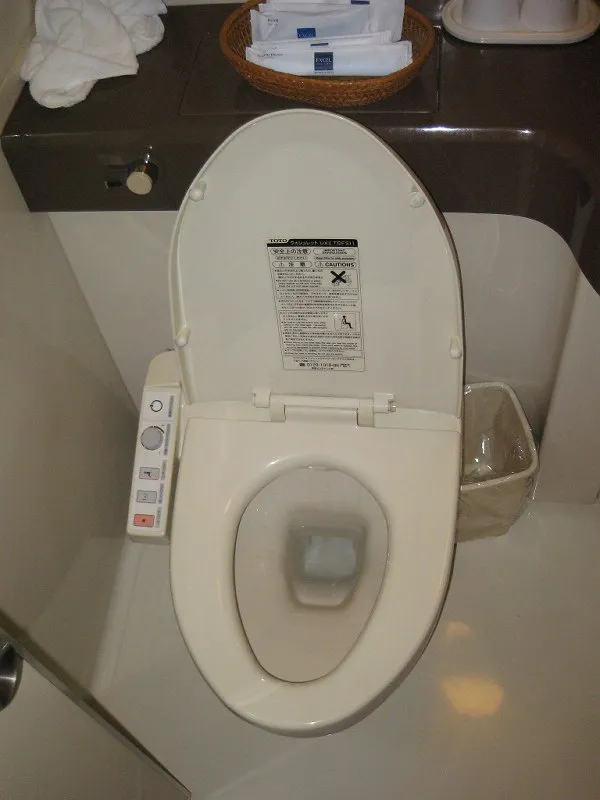
Photo: Jorge Láscar from Australia, CC BY 2.0, via Wikimedia Commons
A bidet seat looks like a toilet accessory. Electrically, it is a bathroom appliance with a heater, a pump, solenoid valves, a control board, and sometimes a radio. The Japanese washlet made that category famous, and now more US bathrooms are getting the treatment. That is good news for comfort and bad news for anyone who ignores the circuit, the water supply, and the app.
What is actually inside a washlet
The seat is not complicated in principle. There is a water path, a heater, a mixing valve, a pump, and a nozzle assembly. There is a seat heater and a water heater, often the biggest loads. There are solenoid valves that open and close the supply. There is a control board with a thermistor or two, a leak sensor in the base, and a remote receiver. Higher-end models add a cloud module, an app, and a firmware update path.
The heater is the part that matters for your breaker. A modest bidet seat may draw a few hundred watts. A tankless washlet or a smart toilet with heated water can pull well over 1,000 watts when it is heating and washing at the same time. Read the nameplate, not the product page. The nameplate is the number your electrician and your insurance company care about.
The US electrical realities
Bathrooms need GFCI protection. That is basic. A dedicated circuit is strongly recommended for a heated bidet seat or smart toilet, especially if the bathroom circuit already feeds a hair dryer, a vent fan, and vanity lighting. A 15-amp circuit may be fine for a low-power seat, but a high-output washlet can push a shared circuit into nuisance trips. If the manual calls for a dedicated circuit, believe it.
Do not run an extension cord into a wet room. Do not tuck the plug behind the toilet where it can sit in a puddle. Check the cord length and the outlet location before you buy. Some US bathrooms have no outlet near the toilet at all, which turns a simple upgrade into an electrician visit. That is still cheaper than a melted cord.
The app is the least important part
A bidet needs water, power, and a control panel. It does not need an app. The app usually adds remote control, usage statistics, firmware updates, and a cloud account. Sometimes it adds a feature you cannot reach from the seat panel. Sometimes it adds a privacy policy. Ask yourself whether you want a toilet that can receive a firmware update from another country.
I am not against connected bathrooms. I am against a connected bathroom that stops working when the Wi-Fi does. Look for manual controls that work without the app, a local remote that does not require a hub, and a way to disable the cloud module if you do not need it. If the model only works through an app, that is a design choice. Make it an informed one.
The buyer checklist I wish every listing included
- UL or ETL listing on the product, not just the power adapter
- Nameplate wattage and whether the manual calls for a dedicated circuit
- GFCI protection at the outlet, and no extension cords
- Water supply pressure and backflow protection requirements
- Replaceable parts: nozzle, solenoid, heater, control board, remote
- Leak sensor in the base and a manual shutoff valve within reach
- Standby power draw, because a heated seat idles all day
- Local controls that work without the cloud
- Warranty terms that do not vanish when you add a smart leak sensor
- A service manual or parts diagram before you need it
Repair parts availability is the sleeper issue. A washlet is a plumbing fixture with electronics, and plumbing fixtures last a long time. If the solenoid fails in year four and the importer has moved on to a new model, you have an expensive seat with a bad valve. Check whether the brand stocks parts in the US and whether the model has been around long enough for anyone to fix it.
A local leak alert that leaves the warranty alone
I do not open a sealed washlet to add a sensor. That is how you lose a warranty and create a new leak path. Instead, put a Zigbee or Z-Wave leak sensor on the floor beside the toilet, another in the vanity cabinet if the supply line runs through it, and a rope sensor around the base if the model has a history of condensation. Add a smart shutoff valve on the toilet supply line. None of that touches the internals.
For a little more insight, put a CT clamp or a smart plug on the bidet circuit and watch the standby draw. A sudden change in idle wattage can mean the seat heater is stuck on or the control board is unhappy. That is not a substitute for a leak sensor, but it is a useful second opinion. In Home Assistant, I trigger a notification if the leak sensor gets wet, if the shutoff valve closes, or if the bidet’s idle power jumps by more than 20 watts for an hour.
The polite conclusion
A Japanese smart toilet is a legitimate comfort upgrade, and the engineering inside a good washlet is genuinely clever. It is also a wet-room appliance with a heater and a water valve. Buy it like you would buy a dishwasher: check the circuit, check the parts, check the listing, and do not let the app decide whether the seat works. Your bathroom does not need a cloud account. It needs a GFCI, a shutoff valve, and a leak sensor that tells you the truth before the hallway carpet does.