When Comcast Went Down, My Neighborhood Kept Talking: Building a $20 LoRa Mesh That Ignores the Internet
Last February, a car clipped a utility pole two streets over and took out fiber for the whole neighborhood. Three days, no internet, spotty cell service. My neighbors were asking each other if anyone had heard about the road closure — by walking door to door, like it was 1985.
That was the moment I decided my IoT hobby needed a plan B. Not a cloud backup. Not a failover SIM. Something that works when everything else doesn't. Enter LoRa mesh.
Why LoRa, and Why Mesh
LoRa is the long-game radio of the maker world: sub-gigahertz frequencies, kilobits of bandwidth, and range measured in miles, not feet. A single LoRa node can whisper across a typical American suburb on a fraction of a milliwatt.
But a single link is a single point of failure. Mesh networking — specifically Meshtastic, the open-source firmware that's exploded on Heltec and LilyGO hardware — lets every node relay for its neighbors. Your neighbor's roof-mounted node becomes your backhaul. Nobody pays for a plan. Nobody owns the network.
Total hardware cost per node? Roughly $20–$30 depending on sales. I started with four boards.
The Hardware Lineup
I tested two boards most makers land on:
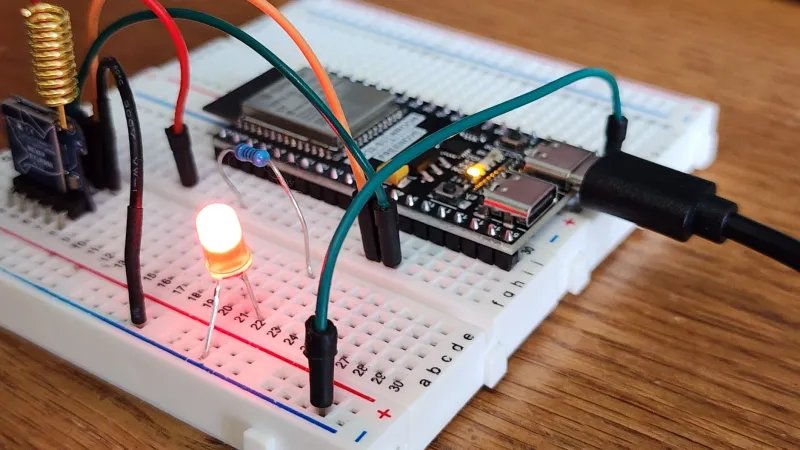
- Heltec WiFi LoRa 32 V3 — ESP32-S3, OLED included, ~$23. Great default pick.
- LilyGO T-Beam — built-in GPS makes positioning trivial, ~$30. Best for nodes you want to place on a map.
For antennas, don't skip this: the stock rubber ducks are mediocre. A $10 868/915 MHz half-wave antenna on a small ground plane doubled my usable range. In the US you'll want the 915 MHz variant — the 868 MHz EU boards are technically out of compliance here.
Flashing and Setup: Painless, Mostly
Meshtastic ships as a web-based flasher now. Plug in over USB, pick your board, wait two minutes. Configuring channel names, encryption keys, and node roles happens over Bluetooth from your phone.
My topology ended up like this:
- Roof node (Heltec, powered, high gain antenna) — the workhorse
- Garage node (LilyGO T-Beam) — GPS beacon plus relay
- Portable node in a 3D-printed case with an 18650 cell — my "walkie-talkie"
- Neighbor's house — he got hooked and mounted one on his chimney
Real Range Numbers From a Real Suburb
Our neighborhood is classic US suburbia: single-family homes, mature maples, quarter-mile blocks. Here's what I measured over a month of testing:
- Line of sight (rooftop to rooftop, ~0.8 miles): rock solid, negligible packet loss
- Street level to rooftop (0.4 miles, through houses): about 92% delivery
- House to house at ground level (0.2 miles): usable, but foliage in summer cost me maybe 15%
- Across the elementary school's ball fields (1.2 miles): flawless with the upgraded antennas
The mesh's real trick showed up in the dead spots. Messages from my portable node couldn't reach the roof directly from the cul-de-sac, but hopping through the neighbor's chimney node got them there every time. That's the whole pitch: coverage by cooperation.
Battery Life: Better Than I Hoped
The portable node on a single 18650 (3400mAh) ran 11 days of typical use with the screen off and a 10-minute telemetry interval. The always-on garage node, fed by a small 6W solar panel and a charge controller, hasn't been below 80% since April — including a week of rain.
Duty cycle is everything. LoRa radios sleep 99.9% of the time. If you want weeks of runtime, resist the urge to crank telemetry frequency.
What It Actually Gets Used For
Honestly? More than I expected. My neighbor and I trade sensor readings — his rain gauge, my soil moisture, both visible to anyone on the mesh. During the next outage (there's always a next one), we've got a text channel that works with zero infrastructure. During the July 4th block party, the portable node became a de facto group chat for the cul-de-sac.
I've also bolted a door sensor to my garden shed and a temperature probe to the crawlspace. All offline, all free to run.
The Case for Offline-First IoT
We've all watched disasters — hurricanes, ice storms, wildfire evacuations — take out connectivity exactly when communication matters most. The smart home industry's answer is usually a cloud dependency that turns your $40 sensor into a paperweight when a server in Virginia hiccups.
LoRa mesh flips that. The network is the community. No subscriptions, no accounts, no company that can shutter the service. If you've got a Raspberry Pi gathering dust and $25 for a LoRa board, you can have your first node running tonight.
The internet will come back. It always does. But it's awfully nice knowing your neighborhood has a voice that doesn't depend on it.