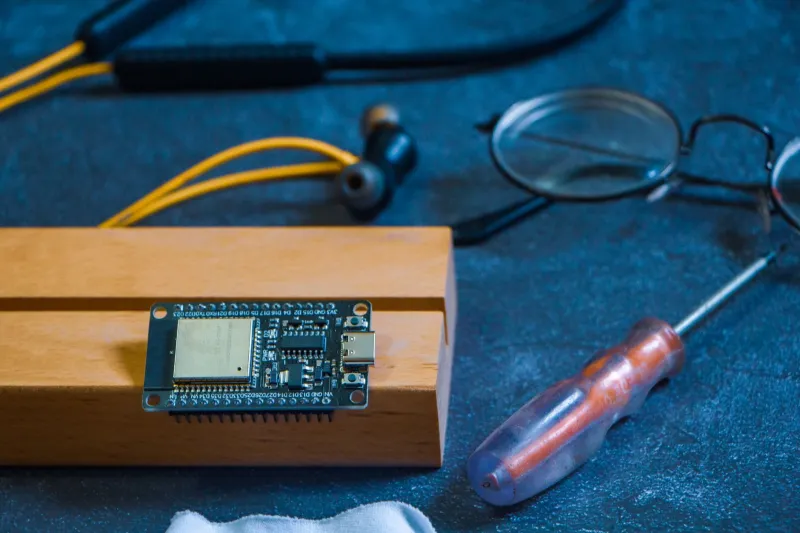
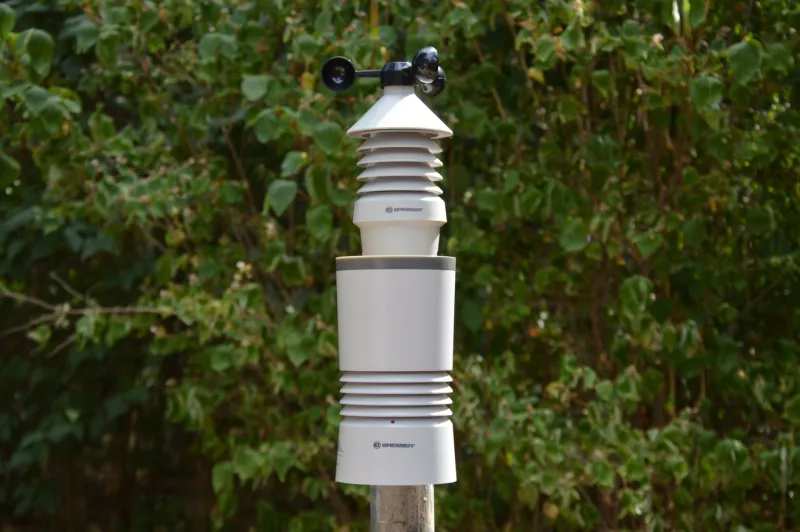
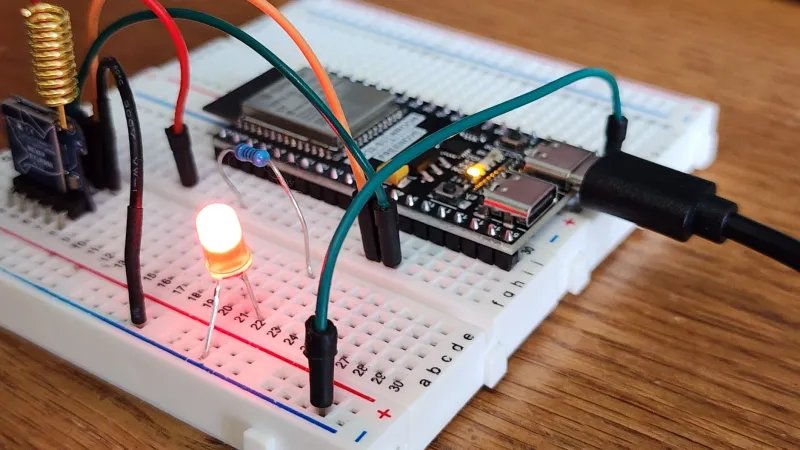
Away From Home, Still in the Know: Eight ESP32 Builds That Watch the House for You
The Real Test Isn't the Build — It's the Absence
Anyone can wire an ESP32 to a sensor and get it working on their desk. The genuinely hard part of a remote-monitoring build is week three, when you're in a Denver hotel room and your basement sensor has been silently disconnected since Tuesday. Designing for unattended operation — flaky Wi-Fi, brownouts, router reboots — is what separates a fun weekend project from something you can actually trust.
Every project below gets three scores: build time, total cost, and an away-reliability rating. All of them use the ESP32 because of one killer feature: deep sleep. A properly configured ESP32 can sip from a battery for months between check-ins.
1. The Freezer Sentry That Saves the Groceries
A DS18B20 waterproof probe, an ESP32, and a 2,000mAh battery. The board sleeps, wakes every ten minutes, reads the temperature, and pushes it to a Google Sheet or Home Assistant. If the reading climbs above 20°F for two consecutive checks, you get a push notification — hours before the ice cream turns to soup.
Build time: 2 hours. Cost: ~$12. Away reliability: 9/10. The freezer's interior is RF-quiet and climate-stable; the only failure mode is a dead battery, and deep sleep makes that a once-a-year event.
2. Water Leak Alarms That Actually Text You
Pair the ESP32 with a $4 contact-based water sensor placed by the water heater, under the washer, and behind the toilet. The trick for travel-grade reliability: use a latching design. Once water is detected, the ESP32 stays awake and re-sends the alert every five minutes until acknowledged, rather than firing one notification that a Do Not Disturb setting might swallow.
Build time: 3 hours for three units. Cost: ~$10 each. Away reliability: 8/10.
3. The Plant Watering Sentinel
A capacitive soil moisture sensor (resistive ones corrode in weeks — skip them) plus a small pump or, simpler, just monitoring. Log moisture daily, alert when it drops below threshold, and hand your plants' fate to a $15 board instead of a neighbor who's also out of town.
Build time: 2 hours. Cost: ~$15. Away reliability: 7/10 — soil sensors drift, so calibrate before you leave.
4. Porch Package Watcher
A beam-break or vibration sensor on the porch, ESP32 inside a weatherproof box, and an ESP32-CAM pointed at the action. When the vibration triggers, snap a photo and push it to your phone. A $10 ESP32-CAM won't replace your Ring, but it also won't charge you a subscription to see your own doorstep.
Build time: 4 hours. Cost: ~$20. Away reliability: 6/10 — cameras are power-hungry and Wi-Fi hungry.
5. Mailbox Arrival Flag
A reed switch on the mailbox door, an ESP32 with deep sleep, and a LoRa or long-range Wi-Fi link depending on your driveway. One notification per opening, battery measured in months.
Build time: 3 hours. Cost: ~$18. Away reliability: 9/10.
6. Basement Humidity and Mold Canary
An SHT31 sensor logging temperature and humidity every 15 minutes. Alert if humidity crosses 65% — the mold risk line. Summer vacation plus a failed dehumidifier is exactly the disaster this catches.
Build time: 2 hours. Cost: ~$14. Away reliability: 9/10.
7. Sump Pump Heartbeat Monitor
The most boring project here and possibly the most valuable. A current transformer clamp on the pump's power cord confirms the pump is actually cycling. No pump activity for 24 hours during rain? Alert. Continuous running? Also alert.
Build time: 3 hours. Cost: ~$16. Away reliability: 8/10.
8. The Whole-House Watchdog
Combine the leak sensors and freezer probe into one ESP32 with a multiplexer, reporting through a single MQTT connection. Fewer radios, fewer failure points, one dashboard.
Build time: 6 hours. Cost: ~$30. Away reliability: 8/10.
Firmware Survival Tips for When You're 1,000 Miles Away
- Set a watchdog heartbeat. Publish a "still alive" message every check-in. A dead-man-switch service like Uptime Kuma alerts you when the heartbeat stops — because the worst failure is the silent one.
- Retry with backoff. When Wi-Fi drops (and it will, usually during a router auto-update at 3 a.m.), the ESP32 should retry and cache readings to flash rather than crash-looping.
- Watch the battery remotely. Report voltage with every check-in so a dying node announces itself before it dies.
- Use static IPs or mDNS. DHCP lease expiries have ruined many a vacation dashboard.
Build two or three of these before your next trip and you'll discover the quiet luxury of the maker lifestyle: checking your basement's humidity from a beach chair, and knowing the answer before you look.