Five Houses, One Server, Zero Subscriptions: How Our Block Built a Camera Mesh That Answers to Nobody
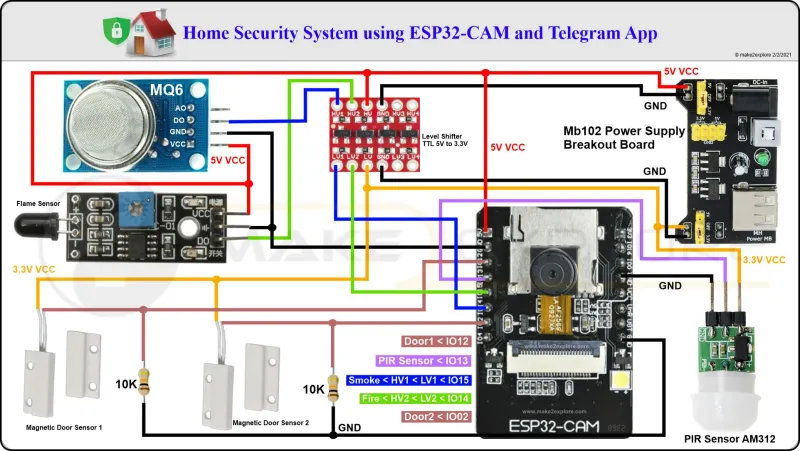
Photo: ESP32 camera module mounted under house eave DIY security, via hackster.imgix.net
The Problem With Every Security Camera I've Ever Owned
Here's the thing nobody tells you when you buy your first cloud camera: you're not the customer, you're the footage farm. I realized this after reading the terms of service on my third subscription-based doorbell. My front porch was effectively a data collection point for a company I'd never met.
So when my neighbor Dave mentioned someone had gone through cars in our cul-de-sac at 2 AM, my maker brain went somewhere different. Instead of everyone on the block buying their own cloud-connected gadget, what if we built one system, together, that lived entirely on our street?
That was eight months ago. Our little camera mesh now covers four houses and the shared court between them. Total cloud involvement: zero. Total monthly cost: whatever electricity the server draws, split five ways.
The Hardware Shopping List (Split Five Ways)
We went all-in on the ESP32-CAM, and honestly, it's absurd what that board can do for ten bucks.
Per node:
- ESP32-CAM module — around $10, includes the OV2640 camera
- FTDI programmer — $8 once, shared between all of us (only needed for flashing)
- 5V power supply — we used weatherproof USB adapters, about $6 each
- Weatherproof enclosures — $5 apiece from the big-box hardware store, with a drilled hole for the lens
The brain of the operation is a refurbished Mini PC that lives on a shelf in my garage — a N100 box I picked up for $130. It runs the whole show: video ingestion, motion detection, storage, and the web dashboard every household can pull up on their phone.
Grand total across five households: roughly $240, or about $48 each. That's less than one month of a premium subscription service for a family of four, and it covers all four of us plus the neighbor who chipped in but wanted no cameras facing his yard.
Firmware: Boring, Local, and Perfect
We didn't reinvent anything. Each ESP32-CAM runs a lightly modified ESP32 camera web server sketch, streaming MJPEG over the local network. The Mini PC runs Frigate in Docker with a cheap Coral USB accelerator for object detection — it can tell the difference between a person, a car, and Dave's cat, which matters when you're reviewing 3 AM motion events.
A few practical lessons from the flashing bench:
- Flash everything before mounting. Pulling a board off an eave to reflash it is nobody's idea of a fun Saturday.
- Label every board. "Unit 3 — North corner of the Sandovals' garage" beats "the one with the blue tape."
- Set static IPs. Four cameras with DHCP leases that rotate will absolutely ruin your weekend.
Image quality from the OV2640 is nothing to write home about in daylight and genuinely rough at night. But here's what we learned: we're not making Hollywood films. We're answering one question — who or what was just here? — and a grainy 640x480 frame that shows a face or a license plate does that job fine.
The Footage Never Leaves the Block. Here's How We Enforce That.
This was the part I cared about most. The rules are simple and written down:
- The Mini PC has no port forwarding and no inbound firewall rules. Nothing gets in from the internet.
- Remote access happens through a Tailscale tailnet — each household gets an account, and the server is only reachable from our devices.
- Footage auto-deletes after 14 days. Nobody needs a year of empty driveway.
- There is no app, no account, no third party. The dashboard is a web page served from my garage.
The irony isn't lost on me: the most private camera system I've ever used is also the cheapest.
The Legal Etiquette Nobody Teaches You
Before we mounted a single bracket, we did our homework, and you should too. Rules vary by state, but the broad strokes for a setup like ours:
Film shared and common areas, not private ones. Our cameras cover the street-facing sides of homes, the shared court, and the mailbox cluster. Zero cameras point into a neighbor's yard, windows, or anywhere anyone has a reasonable expectation of privacy. Audio recording is a legal minefield in the US — many states are two-party consent — so we simply disabled the microphones entirely in firmware.
Get it in writing. We drafted a one-page agreement: who owns the hardware, who maintains the server, how long footage lives, and how a neighbor can request deletion of anything that catches them. It took twenty minutes with a template and made everyone — including the neighbor who opted out — a lot more comfortable.
Tell everyone. Small yard signs went up at each participating house. In most states, visible cameras in common areas don't require consent, but transparency is cheap and prevents the awkward porch conversation later.
The HOA Conversation (It Went Better Than Expected)
I'd braced for a fight. Instead, the HOA board's biggest concern was aesthetics — they didn't want a bunch of mismatched gadgets stapled to the siding.
What actually sold them:
- One presentation, five minutes. I showed the enclosure photos, the mounting plan, and the fact that everything was painted to match trim colors.
- No internet exposure. The board had just read an article about camera systems being hijacked. Explaining that ours can't be reached from outside the neighborhood flipped two skeptics into supporters.
- It's communal. The HOA liked that coverage was shared rather than four homeowners each doing their own thing. There's now quiet talk of the HOA funding two more nodes for the pool area.
The social engineering, it turns out, was the easy part. People respond well to "no subscriptions, no footage leaving the block, and I'll do all the work."
Life With the Mesh, Eight Months In
The system has caught: a delivery driver lobbing a package across the court (we got an apology), a raccoon that had been tipping trash cans with genuine malice aforethought, and exactly zero actual crimes. That last one is the point — the best security footage is the kind you never need.
Maintenance has been minimal. One camera died in a July thunderstorm and took ten minutes to swap. The server reboots itself monthly. Dave checks the dashboard more than he checks the weather.
If you've got a few neighbors you trust and a spare shelf, this is one of the most satisfying builds I've done. It's cheaper than one decent commercial camera, more private than any of them, and it turned a row of strangers into an actual neighborhood watch — the kind that sleeps fine at night, because the little boards on the eaves don't.